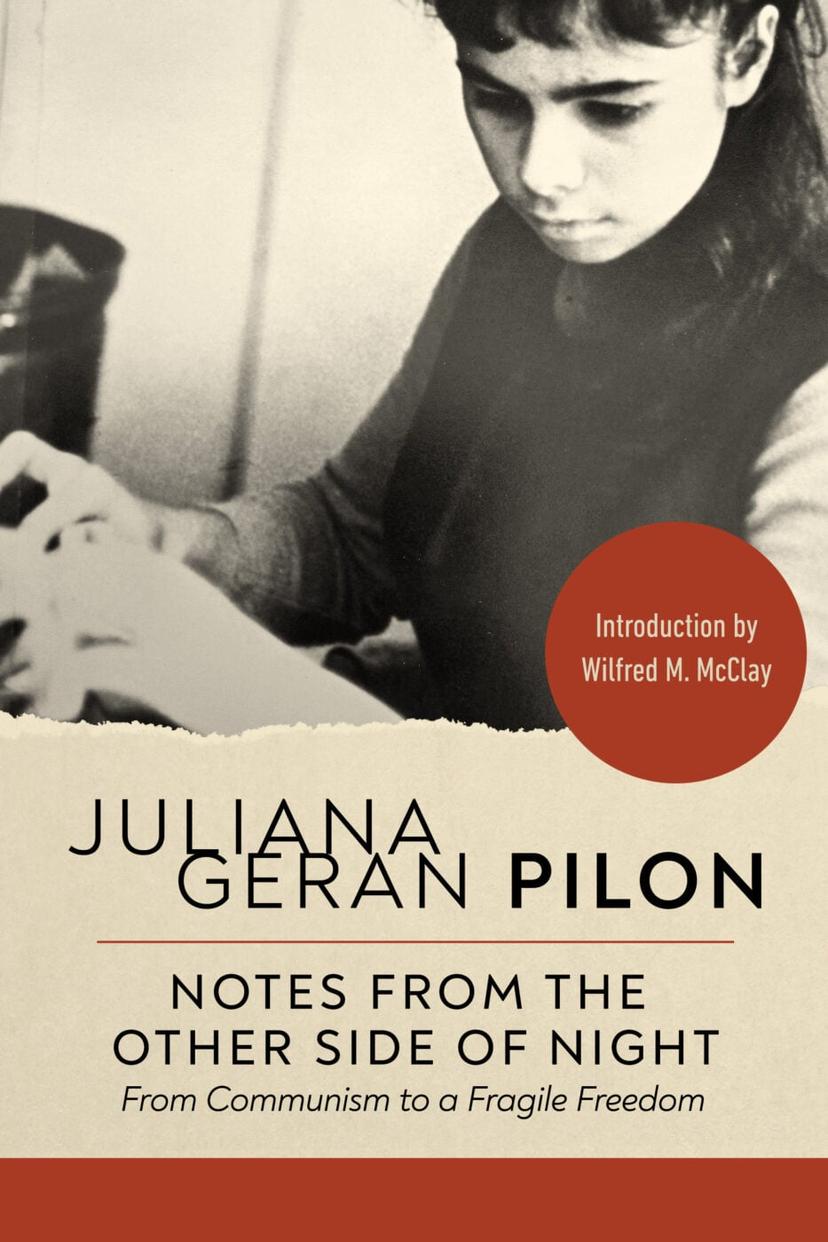
A short review of Juliana Pilon’s Notes from the Other Side of Night in the New English Review
…Second, I also read books–lots of them. This past weekend an unexpected gift arrived in the mail, a book written by Dr. Juliana Geran Pilon, a Senior Fellow at the Alexander Hamilton Institute for the Study of Western Civilization. She is a colleague (we once shared a publisher, Transaction). Pilon has many other books to her credit, including An Idea Betrayed: Jews, Liberalism, and the American Left. This lovely little memoir is titled Notes From the Other Side: From Communism to a Fragile Freedom. It was just republished for the fourth time in September of 2026 and also in Romanian. It is beautifully written work.
Pilon has a quirky, whimsical, and masterful way with the English language. Here, she remembers her Bucharest ancestors who either escaped or were murdered by the Nazis; her childhood in Romania; and, finally, her own and her family’s departure from communist Romania in 1974 when she was a teenager. In a 2026 Afterword, Pilon described what life is like under totalitarian communism, and it is, alas, all too timely. She writes about:
“The onslaught of untruths, the inevitable erosion of trust, and the lacunae of knowledge caused by censorship and corruption…Growing up in Romania’s one-party system, I was used to all that…Living under a government that controlled its citizens lives, where the rule of law meant rule without law, was bad enough. Outlawing emigration by declaring it tantamount to treason was–and is–the last resort of totalitarianism.”
Sounds too much like the ideas and behaviors of all those Marxist maniacs who are setting the West on fire, doesn’t it? No dissent tolerated; whistleblowers are immediately silenced, punished, forgotten. Pilon continues:
“My father’s childhood villa, having already been expropriated by the Nazis, was automatically ‘nationalized.’ As would happen everywhere else in occupied Europe, the new dictators of the proletariat ‘resettled’ themselves inside the mansions belonging to former aristocrats. My father immediately applied for emigration.”
Pilon is exceptionally eloquent as she describes how the authorities humiliated every such emigrant, allowing them very little money and practically no clothing, toys, photographs, or books to take with them. This was also pro forma for all the Jews who were thrown out of Egypt and out of other Muslim Arab countries. Leave if you dare, leave if you must, but you leave penniless and with nothing of sentimental value…