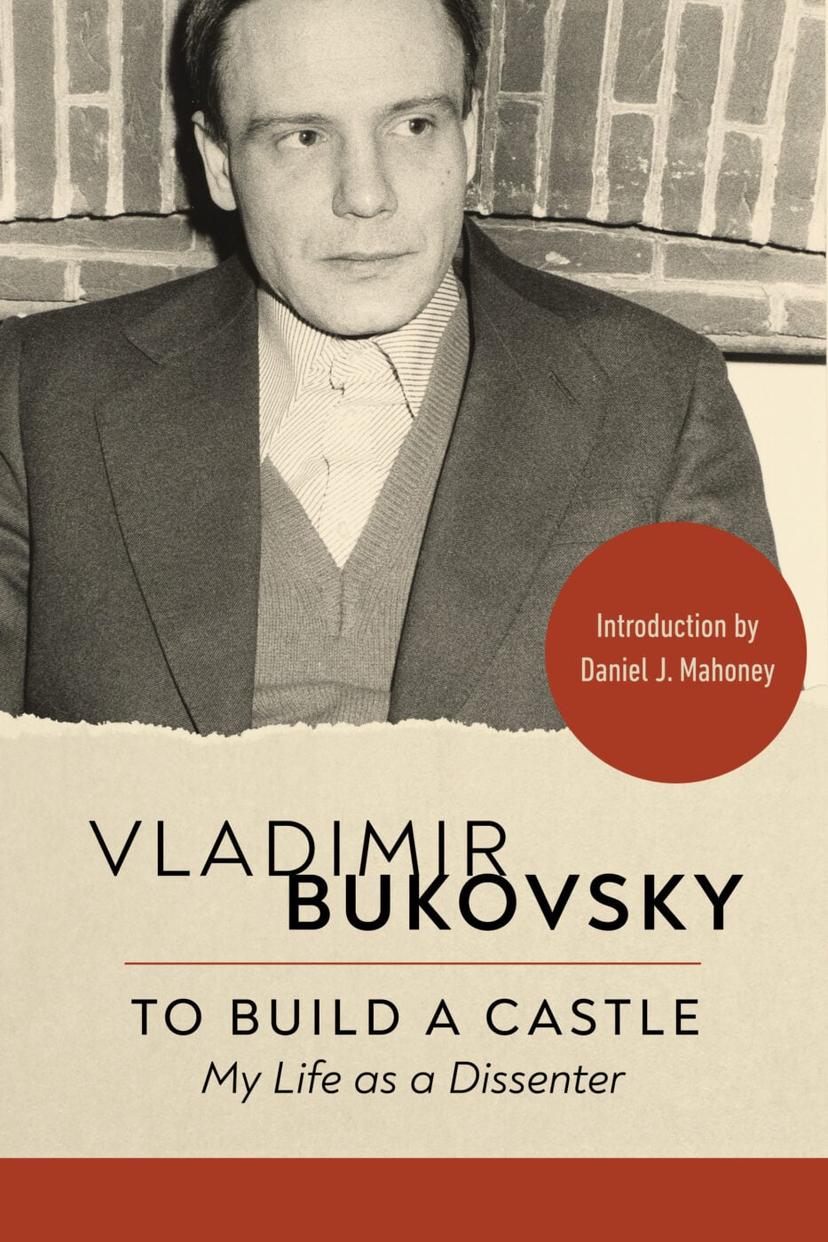
Jacob Howland reviews Vladimir Bukovsky’s To Build a Castle in Law & Liberty
“To Build a Castle occupies pride of place among Soviet memoirs.”
hen Vladimir Bukovsky’s memoir of his public struggle against Soviet tyranny appeared in 1978 in Michael Scammell’s energetic English translation, reviewers welcomed it as an exceptional book. Written with literary flair and suffused with quiet moral authority, it exposed, in excruciating detail, the demonic brutality of the psychiatric repression of political prisoners under Khrushchev and Brezhnev. To Build a Castle also vividly portrayed the misery of life on both sides of the barbed wire in a country ruled by fear, plagued by pervasive aggression, alcoholism, and nightmarish bureaucratic torments, and impoverished by universal corruption and an economically murderous ideology. Perhaps most important for today’s readers, it revealed the precise combination of prudent strategy and exceptional courage, perseverance, intelligence, and memory that are required to fight and win meaningful victories against totalitarianism. Bukovsky’s description of Soviet life recalls the increasing illiberalism, cynicism, and nihilism of our age. Creed & Culture’s decision to reissue his book, with an eloquent and informative new Introduction by Daniel J. Mahoney, can only encourage principled resistance to the perennial threat of ideological tyranny.
Early on in To Build a Castle, Bukovsky describes the education by suffering of a newborn “future Soviet man,” who wouldn’t be “sucking away so peacefully on his pacifier were it not for the Party’s tireless efforts on his behalf. But it won’t be long now before his debts are called in.” His path to enlightenment runs from his first words—Mama, Papa, Lenin—through school and into adulthood, where his wages don’t cover expenses, food shortages are constant, and lines are interminable. The roof of his apartment house has been leaking for years, and his complaints and petitions have achieved nothing. Infuriated, he makes speeches at meetings, distributes leaflets, and even enlists foreigners to send messages to the United Nations. But then his boss takes him to see an official who exudes “a whiff of cryptlike dankness, putrefaction, and despair.” At a general meeting of the workers’ collective, he endures a struggle session, expresses repentance, and promises to reform. Having learned that “no man can flay a stone,” he settles into the irreversible lethargy of the Soviet man, who has “neither honor nor pride, nor a sense of personal responsibility.”
Read the entire review here.