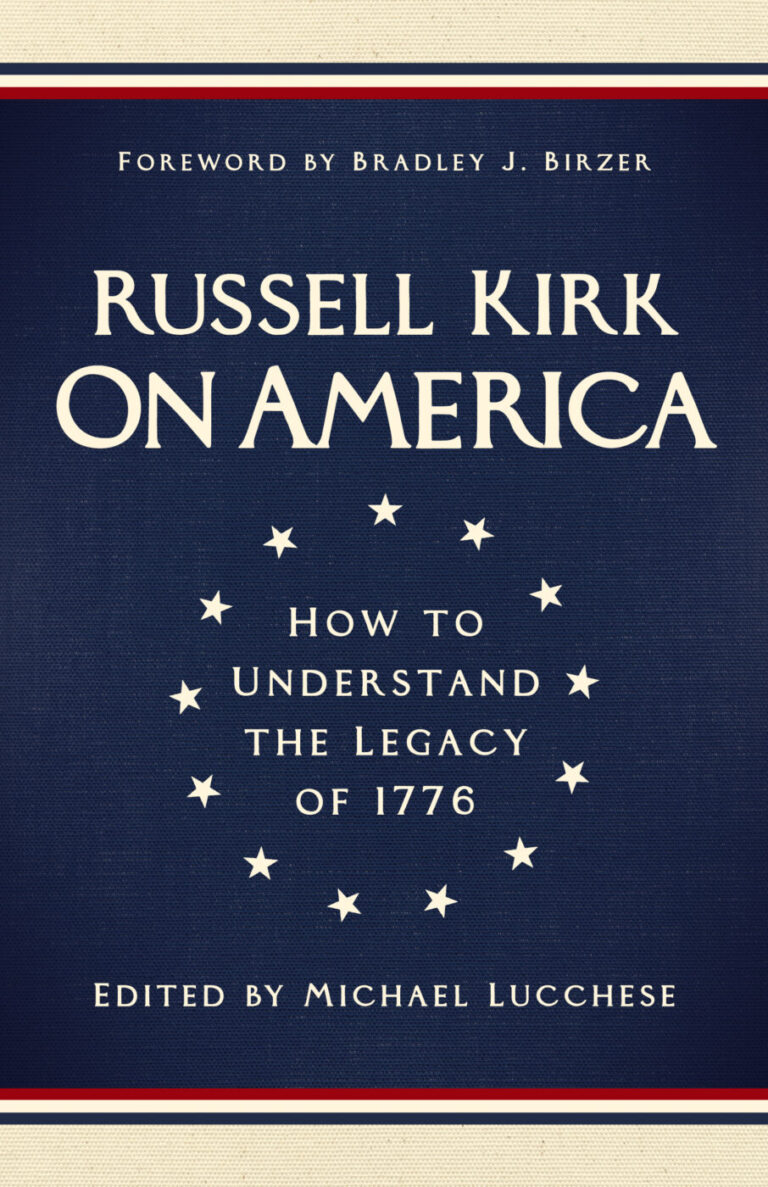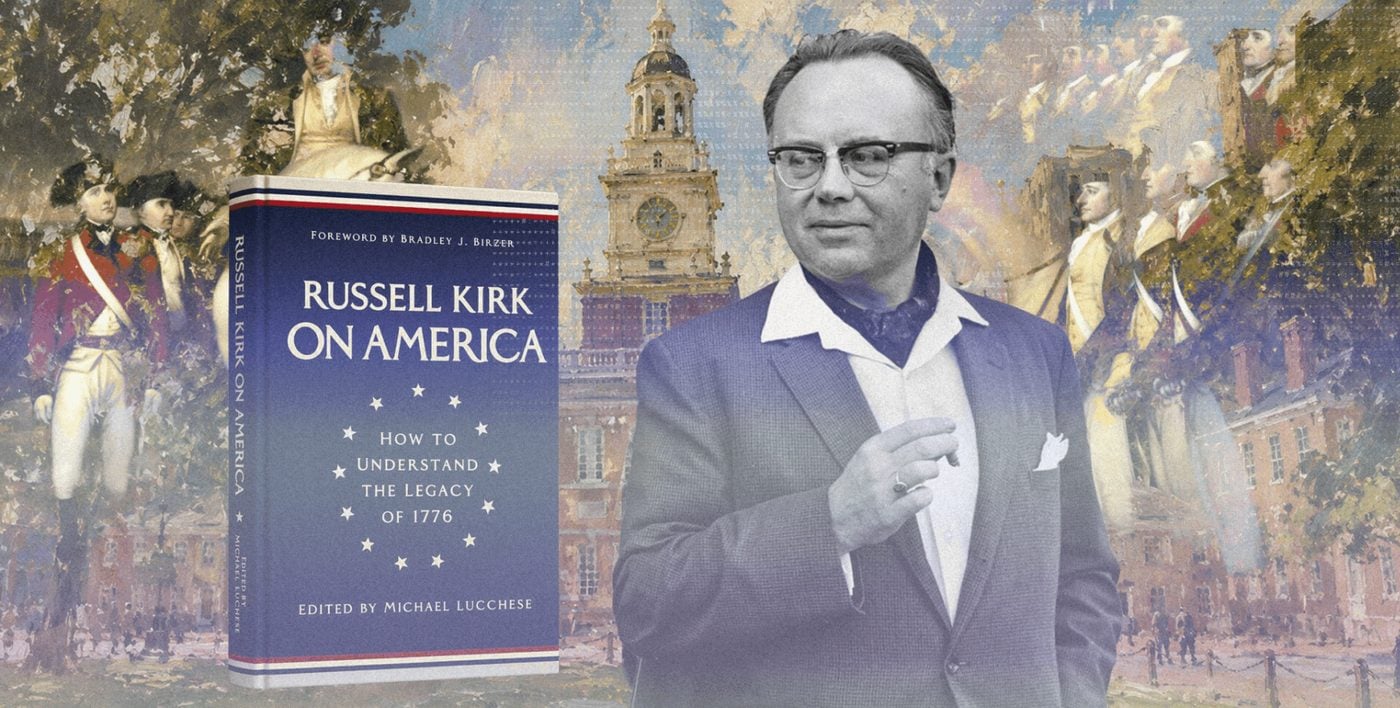
On America by Russell Kirk is reviewed by Allen Mendenhall in Law & Liberty

What better way to observe the semiquincentennial of the American founding than in the company of Russell Kirk? A true gentleman, Kirk spent his career insisting that the founding was neither a revolution in the modern sense nor an experiment in abstraction but, rather, a carefully cultivated inheritance, rooted in centuries of English common law, Christian moral order, and classical wisdom. A new collection of his essays offers a corrective to the sentimentality and ideological appropriation that too often attend our national anniversaries.
The volume arrives at a propitious moment. Its fifteen essays, adapted from earlier works and supplemented by two previously unpublished pieces (a 1970 speech on Abraham Lincoln and an essay on Mark Twain), are organized into three thematic sections: American Roots, which explores the intellectual and moral foundations of American identity; American Statesmanship, which examines figures including John Adams, John Randolph, Abraham Lincoln, and Ronald Reagan; and American Letters, which turns to literature as the deepest register of a civilization’s spiritual condition. A foreword by Bradley J. Birzer of Hillsdale College and an introduction by the editor, Michael Lucchese, frame the collection with evident affection for their subject.
Even for a reader who has studied Kirk for more than two decades, as I have, the essays still yield surprises—and still provoke. One of the more arresting chapters, in an age when Kirk’s name is sometimes invoked by conservatives to lend authority to expansive uses of state power, is just how insistently Kirk counseled against that very thing. On the matter of foreign affairs, Kirk’s anti-interventionism was not the America-First variety born of narrow self-interest, but something more principled: a Burkean conviction that moral order cannot be imposed from without.
As Kirk writes,
The observance of moral principles in international affairs, as in private life, must depend principally on voluntary obedience to the moral order, persuasion, and the force of public opinion.
He elaborates with directness:
A Christian does not believe that he can stamp out evil forever by using force. And thus a Christian nation which understands its own religion cannot set itself up as a regulator of the ways of other states.
On this understanding, the extension of American power beyond its proper sphere is a kind of hubris dressed in the garb of righteousness. It isn’t conservative. Those who cite Kirk’s defense of order against chaos as a warrant for aggressive state action would do well to read these passages.