DG Hart’s Independence Hall: History of an American lcon in Real Clear Books
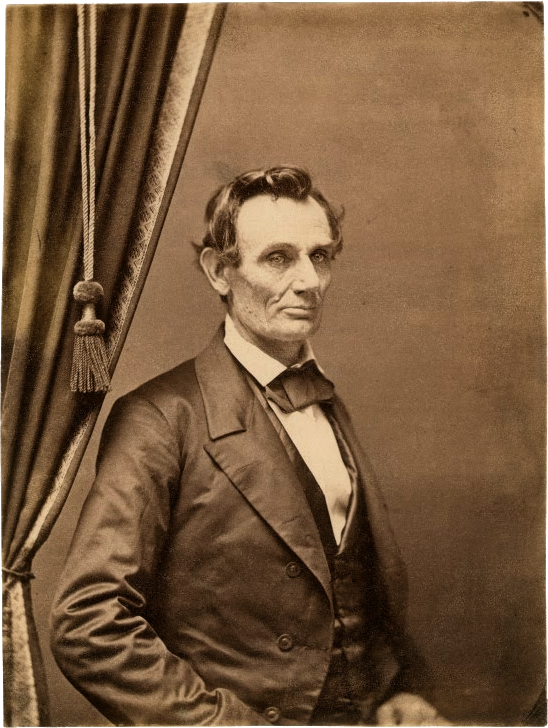
Americans do not associate Independence Hall, the stage for both the Declaration and the Constitution, with Abraham Lincoln. But between 1861 and 1865, crucial dates in the president’s and the nation’s lives, Lincoln was present at the Philadelphia government building and briefly dislodged Independence Hall’s identification with 1776.
Lincoln’s Inaugural Train from Springfield, Illinois to Washington, made stops in Indianapolis, Columbus, Pittsburgh, Buffalo, Albany, and New York City before reaching Philadelphia’s Kensington train depot on February 21, 1861. Before Lincoln’s train entered Pennsylvania, the owner of the Philadelphia, Wilmington, and Baltimore Railroad, Samuel M. Felton, a Harvard graduate who ran steel and rail companies in Philadelphia, hired the Pinkerton agency to infiltrate secessionist groups in Baltimore which were suspected of planning to assassinate the president-elect. Felton did not have to worry about Philadelphia, where Lincoln received well over 50 percent of the vote in a state where the Democratic candidate, Stephen Douglas, received only 3 percent of the vote. Upon his arrival in Philadelphia, Lincoln received a thirty-four-gun salute (for each state of the Union) from the local militia called the Minute Men of ‘76. A horse-drawn carriage took Lincoln from the train station to the Continental Hotel. Along the way, residents crowded the streets to see and cheer the president-elect. At the hotel, the city’s mayor, Alexander Henry, greeted Lincoln before both appeared on the hotel’s balcony and offered brief remarks to the crowd below.
On the evening of the February 21st, starting at 6:45, Lincoln met with his most ardent supporters in Philadelphia. Later that night, advisors took Lincoln aside to tell him about the assassination plot in Baltimore. Lincoln had already decided against a stop in Wilmington, but when asked to leave Philadelphia secretly that night around 10:30 p.m., he firmly declined. The next day, February 22nd, was Washington’s birthday and Lincoln was scheduled to raise the national flag in ceremonies at Independence Hall. He did not want to break his promise to local officials. Crowds outside the Continental Hotel that night celebrated Lincoln’s presence with bands and fireworks. Due to the clamor and the rumors of assassination, Lincoln slept fitfully.
The president-elect left the hotel early the next day – at 6:50 a.m. – with his son Tad. They rode three blocks in an open carriage with an escort of veterans from the Mexican-American War. The banner at the front of the procession to Independence Hall was one used when American soldiers fought in Vera Cruz. This was not Lincoln’s first visit to the area. He had come to Philadelphia in 1848 as a member of the Whig Party to attend a party function held at Independence Square. But until he stepped from his carriage on February 22, 1861, Lincoln had not yet set foot inside Independence Hall. Members of the Philadelphia City Council, who had been making preparations since 5:30 a.m., welcomed the president-elect, who was introduced by Timothy L. Culyer, president of the city’s Select Council.
Lincoln then delivered an extemporaneous speech that expressed the “deep emotion” he felt while “standing here, in this place, where were collected together the wisdom, the patriotism, the devotion to principle, from which sprang the institutions under which we live.” Lincoln was not thinking of The Constitution. “All the political sentiments I entertain have been drawn,” he explained, “from the sentiments which originated and were given to the world from this hall” and “the sentiments embodied in the Declaration of Independence.” He admitted that “the dangers which were incurred by the men who assembled here” and “the toils that were endured by the officers and soldiers of the army who achieved that Independence” had stayed in his mind. What was the “great principle or idea” that bound together the original states of the union? It was “that sentiment in the Declaration of Independence which gave liberty, not alone to the people of this country, but, I hope, to the world, for all future time.”
Lincoln’s off-the-cuff remarks took an ominous and prophetic turn when he pondered a future apart from the ideals of 1776. If the country could not be saved on the basis of the Declaration, he said, “I would rather be assassinated on this spot than to surrender it.” That line may have indicated the effects of the previous evening’s reports about an assassination plot in Baltimore. He quickly pivoted to reassuring his hosts that “there is no need of bloodshed or war.”