Solène Tadié, author of forthcoming book The God-Thirsty reflects on Pope Leo’s visit to France and its potential impact on the future of the Church in Europe.
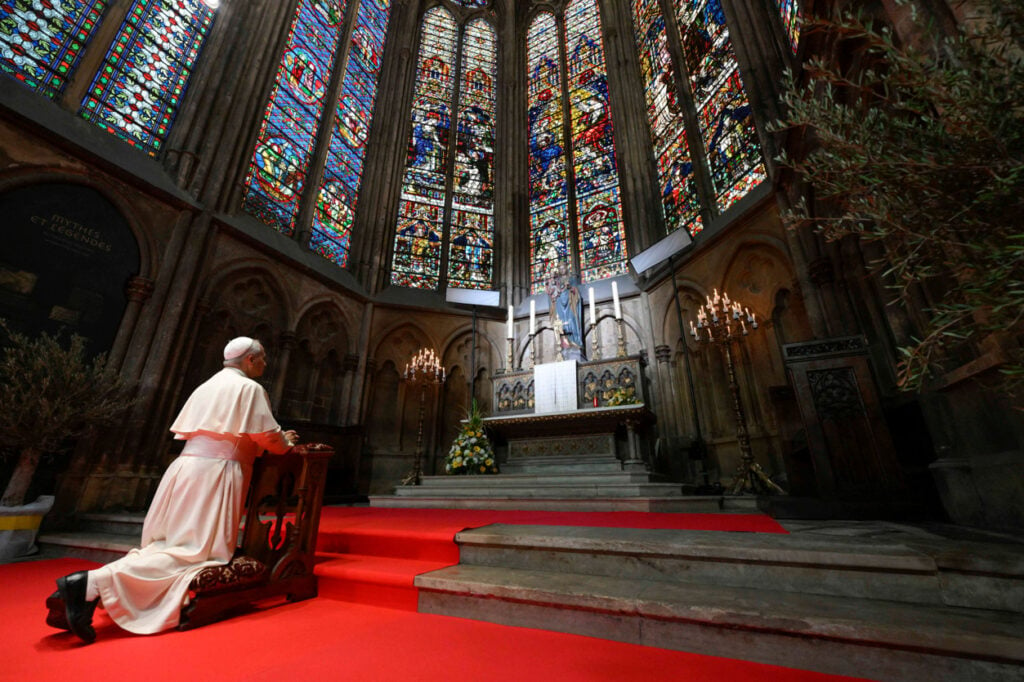
PARIS — “I have to ask: Who, aside from the Pope, is capable of bringing together 600,000 people in France in 2026? Who else but him is able to foster a sense of national unity in our country?”
These words from renowned French journalist Stéphane Bern, a leading figure in the defense of France’s cultural heritage, were expressed in an interview with French media just days before Pope Leo XIV’s Sept. 25-28 visit to France.
At the time, Bern’s remarks may have raised more than a few eyebrows in newsrooms accustomed to the broad consensus surrounding the country’s sacrosanct principle of laïcité.
And yet, more than 800,000 people packed the Place de la Concorde and the Champs-Élysées for the Pope’s Mass on Sept. 26 — including some 200,000 who decided to try their luck at the last minute despite tickets having already run out. Meanwhile, young people had snatched up all 80,000 tickets ahead of the Sept. 25 vigil, presided over by Pope Leo, at the Stade de France.
The crowds alone were among the many signs of the extraordinary popular fervor surrounding the visit. The enthusiasm has led some observers to wonder whether the visit could mark a new stage in a religious awakening already visible in France’s remarkable surge in adult baptisms.
When ‘France Rhymes With Hope’
The impact of the visit could already be measured by the number of public figures — politicians, journalists and intellectuals who had never professed any Christian faith — sharing images of the Pope embracing and blessing children and people with disabilities, expressing their emotion at what they described as a rare moment of unity and solidarity.