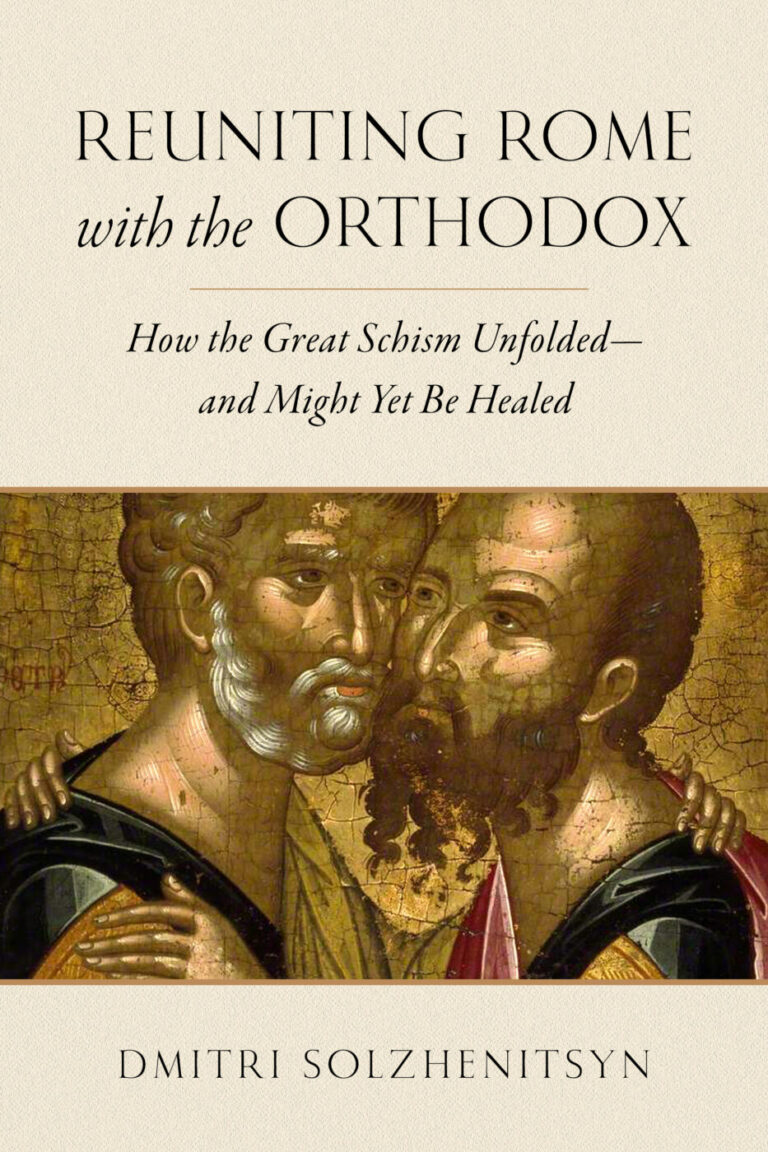
The Catholic Herald reviews Reuniting Rome with the Orthodox
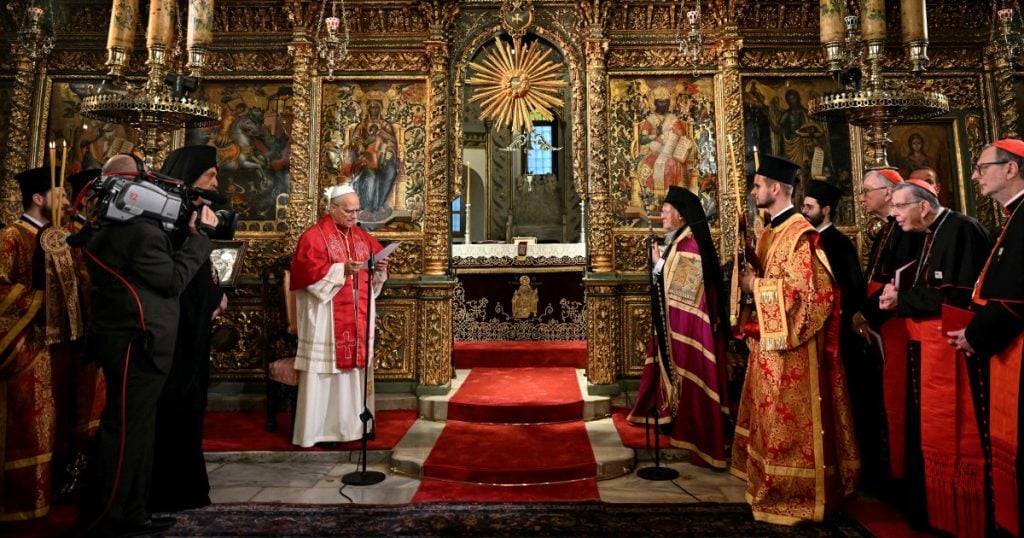
Twentieth-century Orthodox theologian Fr Alexander Schmemann used to say that a requirement for reconciliation with Catholics was a pan-Orthodox synod. That, he added wryly, was “an eschatological concept”. After Schmemann’s death, however, the Orthodox attempted a pan-Orthodox synod in 2016. Admittedly, that event did not succeed in bringing all the particular Orthodox Churches together. The most notable abstainers were the Antiochians and Russians. The event was, nonetheless, a start.
So, perhaps the end of the world is nearer? Alternatively, might there be hope for Christian reunion between Catholics and Orthodox this side of the last trump?
In his new book, Reuniting Rome with the Orthodox, Dmitri Solzhenitsyn, grandson of the Nobel Prize winner Aleksandr Solzhenitsyn, demonstrates a passionate desire for Christian reunion, writing that, as an Orthodox Christian, he “regards the Catholic Church with a bittersweet sense of kinship, akin to the memory of a long-lost brother”. He also shows a deep awareness of the mountain of difficulties that stand in the way of reunion. Nevertheless, he hopes that, with faithfulness “to Christ’s call that we be one, drawing inspiration from our shared first-millennium history and the common heritage of our apostles, fathers and saints while persisting in prayer, perhaps the Holy Spirit will cause this potential to become a reality on this side of the Second Coming of Christ”.
Though not a formally trained theological scholar, Solzhenitsyn has done a tremendous amount of research as part of “a personal quest to understand the origins of the Great Schism… as well as the obstacles that continue to hinder the Churches’ reunification”. Six of his seven chapters are historical accounts, starting with the period of a united Church and ending with the most recent developments in the quest for unity. As the Dominican theologian Fr Aidan Nichols observes in his afterword to the volume – Orthodox theologian Fr Laurent Cleenewerck provides an introduction – while one could quibble with the meaning of some historical details, “the historically informed Catholic… will not find much to quarrel with in Solzhenitsyn’s telling of the tale”.