A review from Andrea Kirk Assaf in From the Academy: A Journal of Academic Renewal
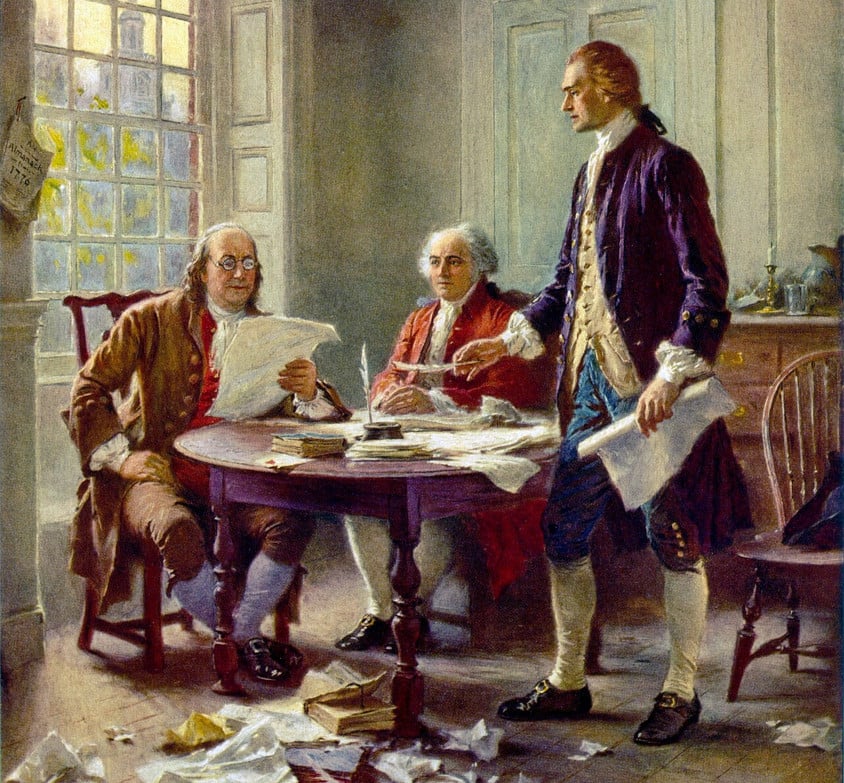
It’s summertime in the village of Mecosta, Michigan, and the semiquincentennial celebrations are well underway. A few days ago, area churches and civic organizations such as the local Daughters and Sons of the Revolution chapters came together to put on a “Colonial Social Gathering.” The full program of demonstrations and activities that evening included a special guest appearance by Benjamin Franklin, colonial dances, and a reenactment of the drafting of the Declaration of Independence.
A mile away from the event, atop the hill above the village, is Franklin Street. At the end of that street, in a brick barn that served as his personal library for over half a century, Russell Kirk penned books, essays, speeches, articles, and letters that helped many Americans understand the unique character of this country that we call home.
Russell Kirk (1918-1994) was best known as the “father of the modern American conservative movement.” He articulated the intellectual and cultural inheritance of the United States in works such as The Conservative Mind: from Burke to Eliot, The Roots of American Order, The American Cause, and America’s British Culture. In 1976, the same year that the United States celebrated its bicentennial with much patriotic fanfare, Kirk’s Roots of American Order first appeared.
It is a hefty tome that argues that America is best understood as a continuation and new expression of Western heritage, rather than a break from it, as the French Revolution so disastrously aimed to be. 50 years later, it is an argument that sorely needs to be reintroduced, and is perhaps more relevant than ever today.
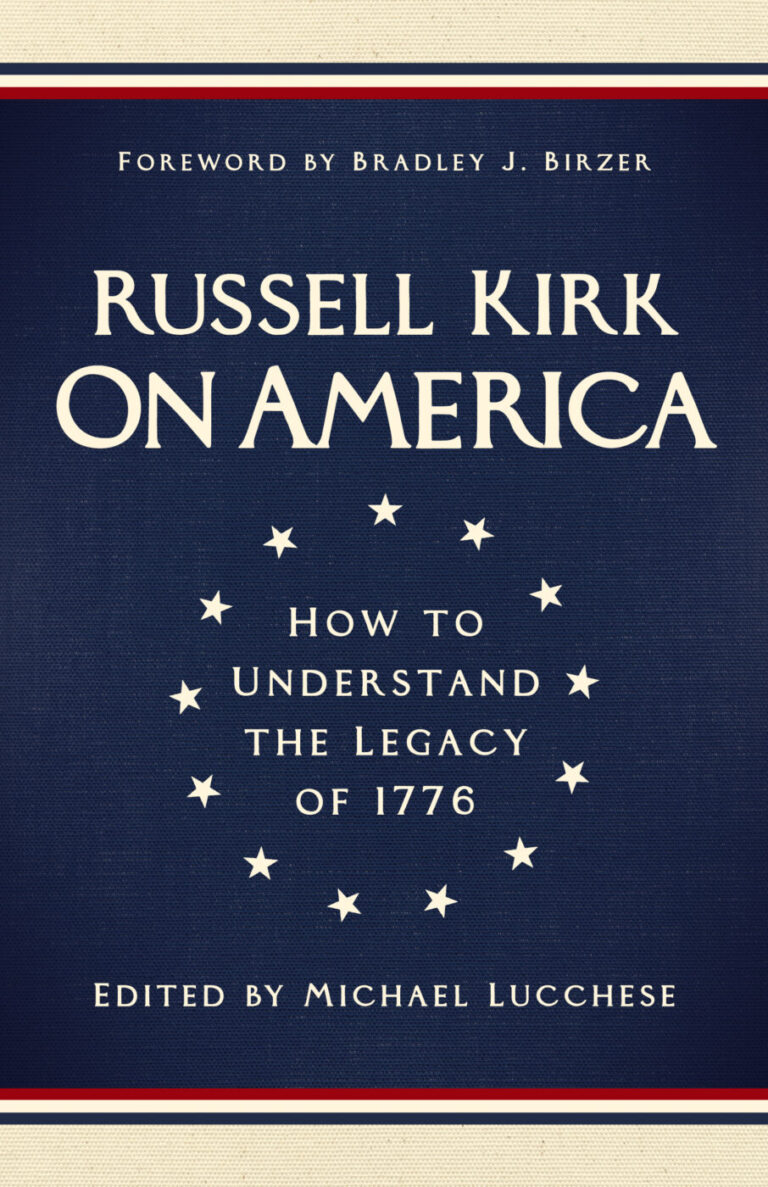
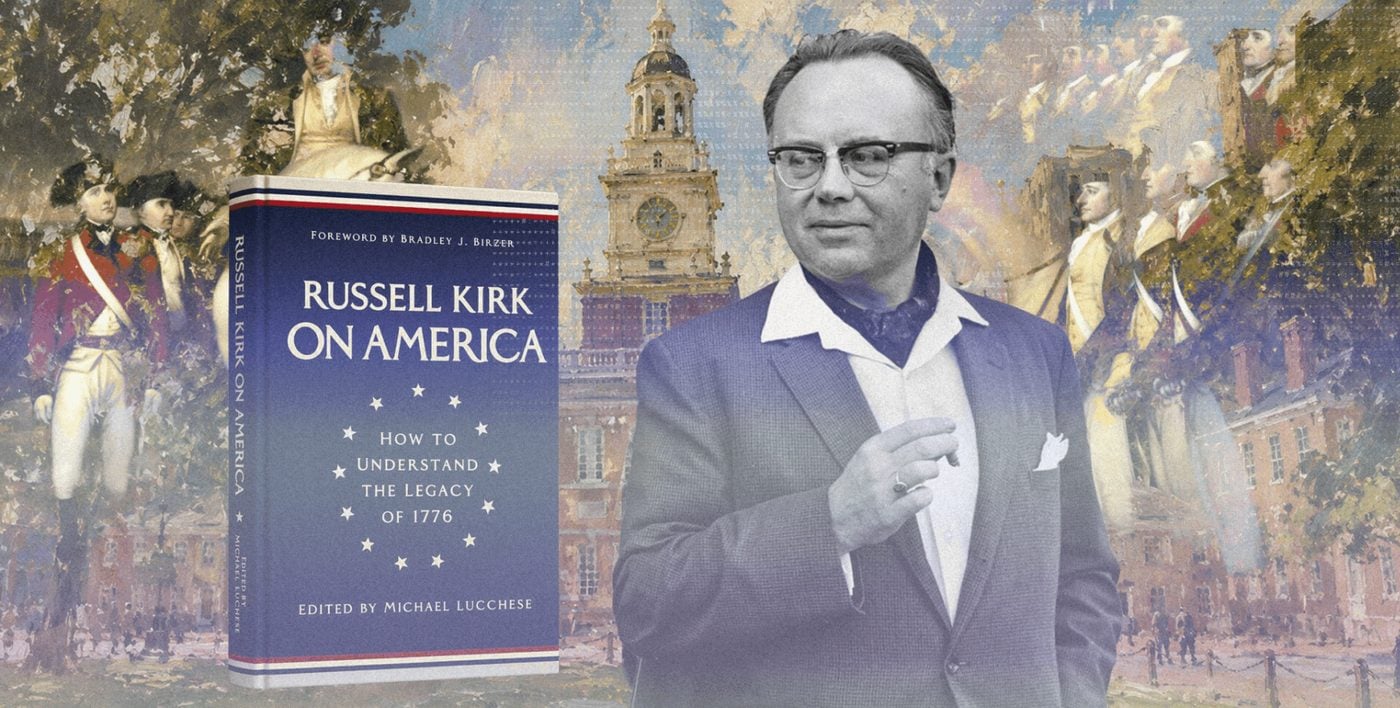
Russell Kirk on America: How to Understand the Legacy of 1776, released in June, arrives on the scene just in time to keep the conversation that Kirk began at the bicentennial alive. Edited by Michael Lucchese, the book is a collection of Kirk’s essays that capture his thought through three categories: “American Roots,” “American Statesmanship,” and “American Letters.” The book features two previously unpublished Kirk essays: one on Mark Twain in “Huckleberry Finn and the Joy of Life,” and another on “Abraham Lincoln and the Dignity of the Presidency.”
Invaluable to recognizing the common thread that runs through these diverse essays—that is, Kirk’s argument that the founding of the United States was a fundamentally conservative, not revolutionary act—is the foreword by Bradley J. Birzer. A Professor of History and the Russell Amos Kirk Chair in American Studies at Hillsdale College, Birzer summarizes Kirk’s view that “America served the world as a kind of anamnesis—a remembrance that returns us to right reason and the proper ordering of things.”
With The Roots of American Order, Kirk shows us that the ideas that made America were not new: “They were present in the Ten Commandments, Greek philosophy, Roman legal structures, the Magna Carta, British common law, and other sources. With astounding perspicacity, the Founders applied ideas taken from these models to their particular historical circumstances to create the Declaration of Independence and the United States Constitution.”order against chaos as a warrant for aggressive state action would do well to read these passages.