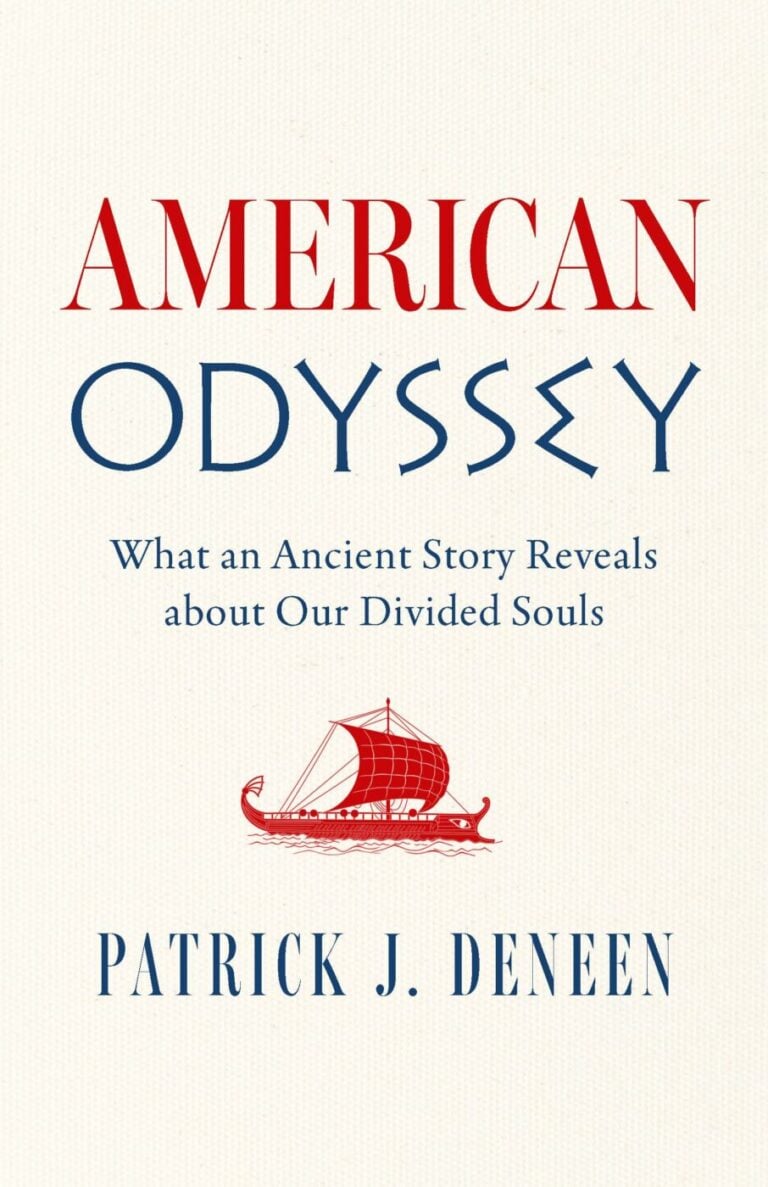
A review of American Odyssey by Eric Adler in Law & Liberty.

Patrick Deneen is perhaps best known as a critic of contemporary American politics and culture. His 2018 book Why Liberalism Failed offers withering criticisms of both the ideology’s classical (or right-wing) and progressive (or left-wing) varieties, and proved popular with a surprising array of intellectual trend-setters, from the New York Times’ opinion columnist David Brooks to former US President Barack Obama. His 2023 sequel, Regime Change, like its predecessor, provides a simplistic impression of liberalism, which has been a primary source of fodder for Deneen’s many detractors.
Whatever one thinks of his philippics, though, Deneen is difficult to dismiss out of hand. For all the concerns about his ultramontane tendencies and supposed cryptic authoritarianism, Deneen is manifestly a cultural observer of rare perspicacity. Not for nothing, then, did this professor at the University of Notre Dame become an important American public intellectual. Even those skeptical of Deneen’s “common-good conservatism” can view him as a sophisticated explicator of the rising tide of right-wing populism in the Western world.
Readers more interested in Deneen’s Tocquevillian cultural criticism than his stumping for post-liberalism may want to turn their attention to his latest work, American Odyssey: What an Ancient Story Reveals about Our Divided Souls. Inspired by the serendipitous chronological proximity of the 250th anniversary of the United States of America and the premiere of Christopher Nolan’s much-anticipated film adaptation of the Odyssey, this short book, which includes a couple of revised snippets from Deneen’s previously published scholarly work, provides a series of sustained reflections on the relationship between Homer’s epic and the American character. Although the author does not hide his political beliefs, his tone (in keeping with a book celebrating an important anniversary in US history) is notably sunnier, marked by greater appreciation for the moral attributes of the American populace than he mustered in his anti-liberal invectives.
Mercifully, American Odyssey ignores the raucous online debates surrounding Christopher Nolan’s movie, with their foolish fascination with the cast’s ethnic profiles and their vitriol toward Emily Wilson’s controversial “woke” translation of Homer’s epic. Attuned to more substantial matters, Deneen sidesteps these rows in favor of a theme he deems central to both the Odyssey and Americans throughout their history.
Even before their country’s founding, Deneen suggests, Americans have been torn between a restless longing to wander and a desire for a homecoming. Although he recognizes the existence of these conflicting impulses in all human beings, Deneen considers them especially germane to the foundation of the United States. After all, the European explorers who ventured to the New World beginning in the fifteenth century could portray their travels as daring exercises in adventurousness aimed at expanding human knowledge. And yet most Europeans who traveled to America did not endeavor to explore; rather, they wanted to find a home.