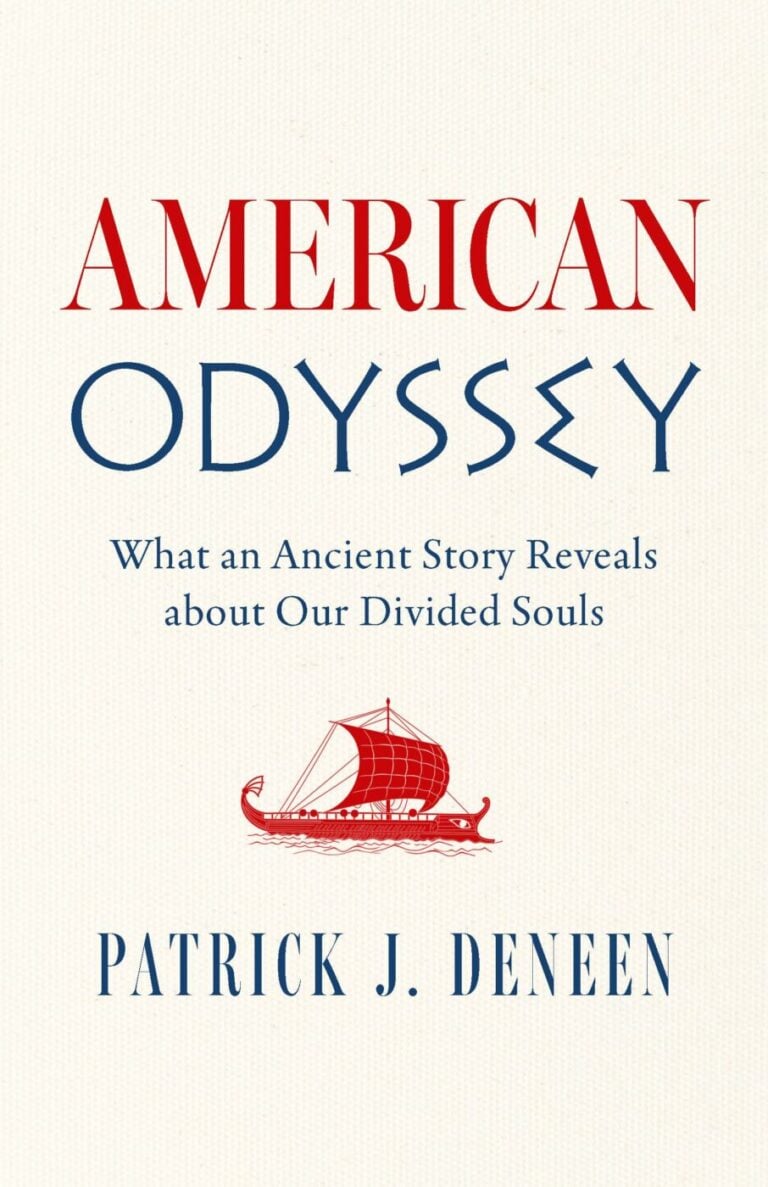
Patrick Deneen’s Op-Ed in the New York Post.

American moviegoers are packing theaters this weekend for “The Odyssey,” Christopher Nolan’s new blockbuster— an entirely fitting way to extend and deepen their July 4th celebrations honoring the Declaration of Independence.
That’s because the director’s source material, Homer’s 2,500-year-old poetic masterpiece, portrays an ancient human tale that to Americans feels deeply familiar.
Nolan’s film tells not only the story of Odysseus, but the story of the American soul.
Odysseus’ narrative is that of a wanderer who seeks his homecoming.
Following the brutal conclusion of the Trojan War, he is among the victorious Greeks who depart the shores of Troy, only to encounter great travails in their journeys home.
For Odysseus, the circuitous trip back to his island of Ithaca takes 10 grueling years.
Along the way, he encounters extraordinary creatures: beasts, gods, monsters, even the drug-doling Lotus-eaters.
His curiosity leads him into the deadly cave of the Cyclops; he is enchanted by the goddess Circe and nearly forgets his goal; he almost throws himself overboard to hear the enticing song of the Sirens.
Yet in spite of every temptation to chase perfect knowledge, unending pleasure and even immortality, his heart remains at home.
That’s the American story: More than the inhabitants of any other nation, Americans are seekers and explorers, pioneers and pathfinders, trailblazers and astronauts.
Most Americans can trace their presence on this continent to forebears who picked up stakes from somewhere else to seek out a new land, who departed from the familiar for the unknown, to seek a more promising future for themselves.
Yet at the same time, those same forebears came here to make a home, to settle, to put down roots.
That’s why I call “The Odyssey” the most American of ancient texts: If we look closely, we see in it an image of ourselves in the portrayal of a man who is simultaneously an explorer and a home-seeker.
We see this duality in the Founding generation — indeed, our first president and national hero embodied it.
As a young man George Washington keenly surveyed the unknown lands to the west and sought to open the frontier to European exploration.