The Mighty Continent reviewed in the University Bookman

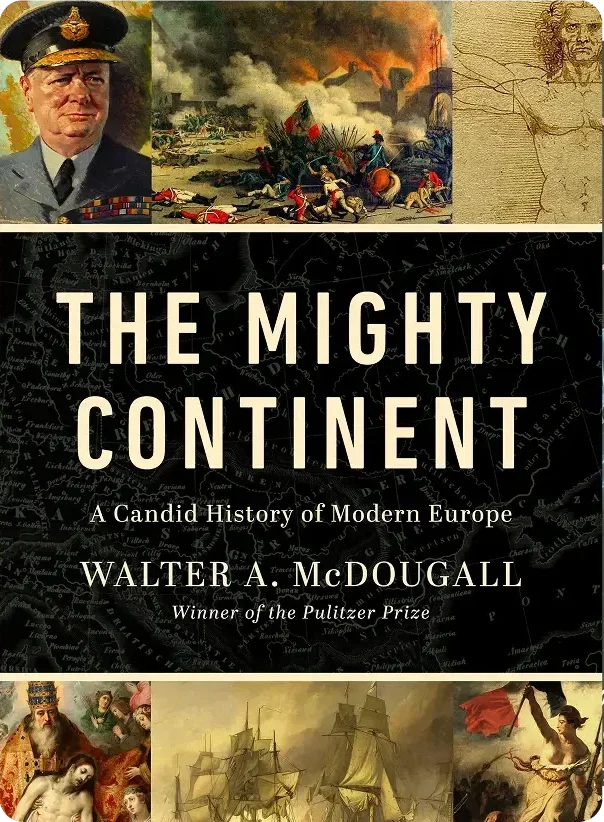
In an era when so many aspects of life are being consolidated, it is refreshing and encouraging to see a new independent publisher emerge. It is especially encouraging that in its first year of existence, Creed & Culture published Walter A. McDougall’s The Mighty Continent: A Candid History of Modern Europe. McDougall is a Pulitzer Prize winner and one of our age’s most engaging and insightful historians. His books tell interesting and meaningful stories about important topics. The Heavens and the Earth, for which McDougall won the Pulitzer Prize, is a book about the space race. Let the Sea Make a Noise: A History of the North Pacific from Magellan to MacArthur explains the history of the North Pacific, including the age of exploration, a topic that is also part of The Mighty Continent. Promised Land, Crusader State tells the story of American involvement in foreign affairs since 1776. The Tragedy of U.S. Foreign Policy, a sequel to Promised Land, Crusader State, explains the role of civil religion in the development and conduct of American foreign policy. His two-volume work on American history, Freedom Just Around the Corner and Throes of Democracy, covers American history from 1585 to 1877.
The Mighty Continent is similar to these earlier books because it combines the three ingredients of McDougall’s success: thematic meaning, interesting and lucid historical narration, and, most importantly, keen insight. McDougall calls his approach in the book “old fashioned, meat-and-potatoes history.” It is the byproduct of teaching a course on modern European history for four decades, and a wonderful example of the symbiosis between teaching and academic scholarship that is also evident in his 2025 book Gems of American History: The Lecturer’s Art. As one reads The Mighty Continent, it is not difficult to imagine how its contents unfold in a semester’s course. It begins with an organizing question: “What does it mean to be civilized—to be civil, to practice civility, to belong to a civilization?” and an organizing theme: the tension and relationship between two attributes of civilization, techne (making, doing, practicing) and themis (culture, the search for meaning, justice, and purpose). These attributes relate to another of McDougall’s themes, the City of Man and the City of God. They indicate that civilization is composed of more than the physical existence, organization, economic prosperity, military success, and material accomplishments of a people. The Mighty Continent traces and explains the development of techne and how Europeans built Western civilization, but it also shows how they imbued it with meaning. Civilizations can be characterized by their institutions, architecture, administration, law, customs, as well as their religious, philosophical, and artistic achievements. In many respects, one cannot be done in isolation from the other. Such things combine to give a civilization identity and character, form and spiritual substance.