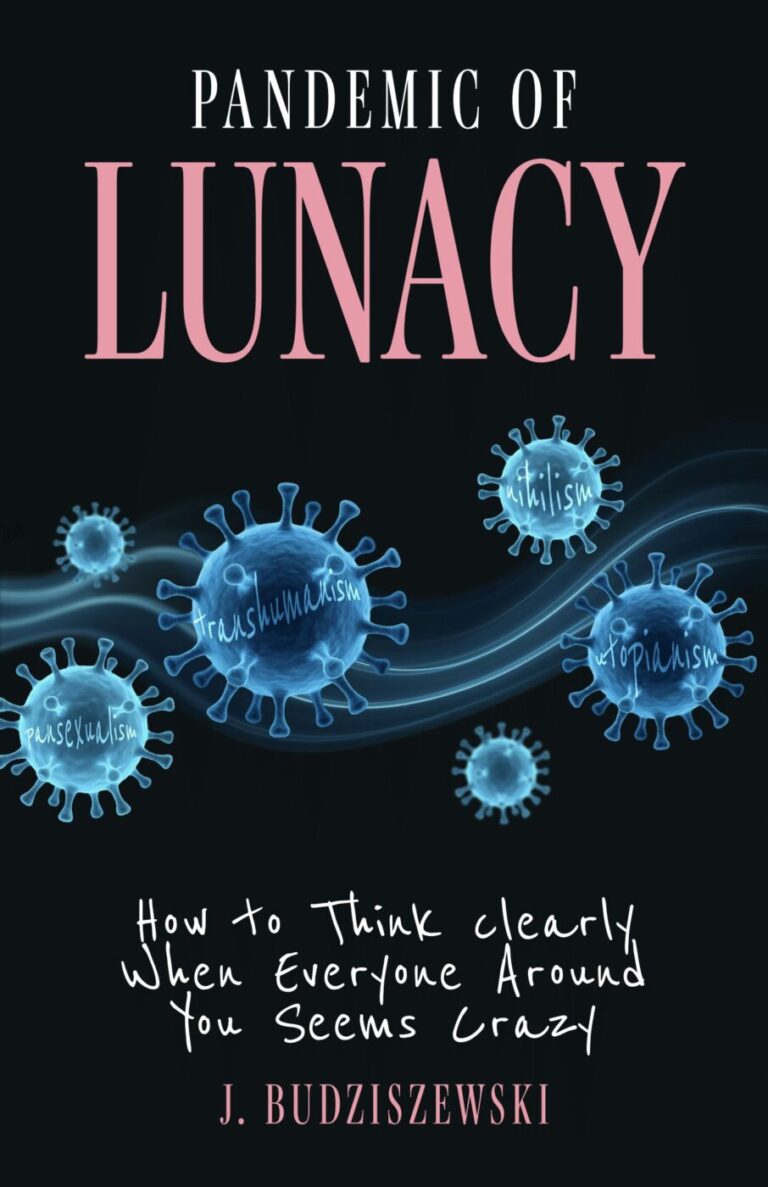
Excerpt of Pandemic of Lunacy, in The New Oxford Review

Because this is to be asserted in general of men, that they are ungrateful, fickle, false, cowardly, covetous, and as long as you succeed they are yours entirely; they will offer you their blood, property, life, and children, as is said above, when the need is far distant; but when it approaches they turn against you. — Niccolò Machiavelli, The Prince
A glass is good, and a lass is good,
And a pipe to smoke in cold weather;
The world is good, and the people are good,
And we’re all good fellows together. — Anonymous
How is it with us: Is human nature good? We seem to want a simple “Yes” or “No.” Evidence for “No” is found in the fact that we often behave dreadfully. Priests who hear confessions will tell you that nothing surprises them. C.S. Lewis asked his readers whether they could go for a week without a base thought or urge. No? How about a day? Still no? How about an hour? I’ve asked the question myself, going as far as, “How about fifteen minutes?” No one yet has told me he could do it. Lewis himself doesn’t conclude that people are just plain bad — but many do. Commenting on the declining birth rate, one writer describes the spirit of the age as “civilizational sadness,” “a belief that we’re just not good or that humans were a mistake.”1
But on the “Yes” side, we do good things, too. Most of us have experienced kindness and friendship. Once past adolescence, most of us are deeply grateful to our parents. Isn’t it good that we can recognize and desire good? In some sense, isn’t it good just to be? And although we can do dreadful things, isn’t it good that we are sometimes sorry and try to make amends?