A history of the Jewish people in Russia in a complete, unadulterated, authorized translation.
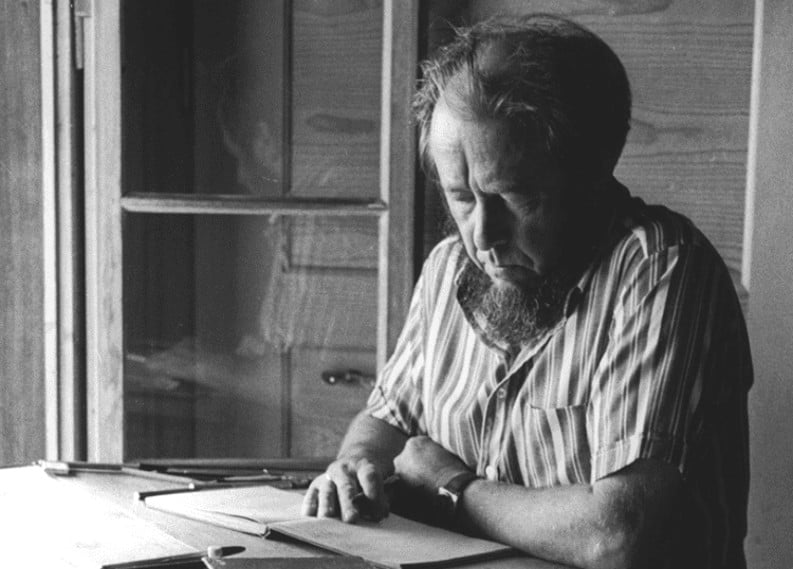
We are thrilled to announce that Aleksandr Solzhenitsyn’s Two Hundred Years Together, a two-volume history of the Jewish people in Russia in a complete, unadulterated, authorized translation from the Russian, is slated to be published by Creed & Culture in Spring 2028.
This first, authorized English edition of Two Hundred Years Together will be furnished with a comprehensive, authoritative introduction by the acclaimed political philosopher Daniel J. Mahoney. The translator is Leo Shtutin, known for his translations of Mikhail Shishkin, Victor Beilis, and Solzhenitsyn’s Essays on Russian Literature (due out in 2027). For more information about Two Hundred Years Together, check out The Aleksandr Solzhenitsyn Center’s page on the book here.
Aleksandr Solzhenitsyn (1918–2008) won the Nobel Prize for Literature in 1970. He is the author of such classic works as One Day in the Life of Ivan Denisovich and The Gulag Archipelago. Two Hundred Years Together originally appeared in Russian in 2001. Stephan Solzhenitsyn, the author’s youngest son and Executive Director of the Aleksandr Solzhenitsyn Center, said, “The Solzhenitsyn family and the Aleksandr Solzhenitsyn Center couldn’t be more pleased that Two Hundred Years Together will appear in a faithful, authorized English edition from Creed and Culture that will do justice to the meticulous research and constructive spirit that suffuse Solzhenitsyn’s original Russian text.”
Readers should note that all English versions of Two Hundred Years Together currently available on the Internet or in print are illegal, pirated, in violation of international copyright law, and entirely unauthorized. Such “translations” do not accurately reflect what Solzhenitsyn wrote; rather, they reflect the prejudices of those who made them.
For some years, our President and Editor Jeremy Beer, was honored to serve as the Solzhenitsyn family’s designated English-language agent for Aleksandr Solzhenitsyn’s works. Two Hundred Years Together was always one of those Solzhenitsyn works we wanted to see published in English. So it is deeply gratifying to have the opportunity, now that Creed & Culture is up and running, to work with the Solzhenitsyn family in publishing this vitally important—and still timely—work.
Two Hundred Years Together begins at the first significant appearance of Jews in the Russian Empire in the late eighteenth century, continues through the turmoil of the Russian Revolution, and ends at the present day. The book grew out of The Red Wheel, Solzhenitsyn’s monumental opus on the Russian Revolution. As Solzhenitsyn himself explains in chapter 13 of Two Hundred Years Together, in The Red Wheel he had shown the Revolution in its full complexity. To avoid boiling down that complexity or skewing it via the narrow prism of the so-called “Jewish question,” he gave The Red Wheel priority of publication in every major language, ahead of Two Hundred Years Together. Now that the English publication of The Red Wheel is at last nearly complete (thanks to the good work of the University of Notre Dame Press), Anglophone readers will be able to place both works in their proper historical context.
In Two Hundred Years Together, while engaging on the economic, political, cultural, and religious level with the Jewish role in Russian history, including the Revolution, Solzhenitsyn emphatically denies (in chapters 9 and 14) that the Russian Revolution was the result of a “Jewish conspiracy” (just as he had earlier forcefully criticized the extreme Russian nationalists who were obsessed with Freemasons and Jews—see, e.g., Russia in Collapse, chapter 25, “The Maladies of Russian Nationalism”).
Let Solzhenitsyn himself have the final word (from the preamble to Part One):
I have never recognized anyone’s right to conceal that which was. Nor can I advocate an accord founded on an unjust portrayal of the past. I call for patient mutual understanding from both parties, Russians and Jews alike, and call on both sides to recognize their own share of wrongdoing. How easy it would be, instead, to turn a blind eye and say, well, that wasn’t really us. . . . I have made a sincere attempt to understand both sides. To do so, I have delved into events, not polemics. I try to show, and enter into debates only in those unavoidable cases where the truth has been buried under accretions of falsehood. I dare to anticipate that this book will not be greeted by the wrath of extremists and fanatics, and will instead facilitate conciliation. And I hope to find well-meaning collocutors among Jews as well as Russians. My ultimate aim, as I envisage it, is to identify, to the best of my ability, mutually agreeable and constructive pathways for the future development of Russian–Jewish relations.
You can read the Press Release from the Solzhenitsyn Center here.