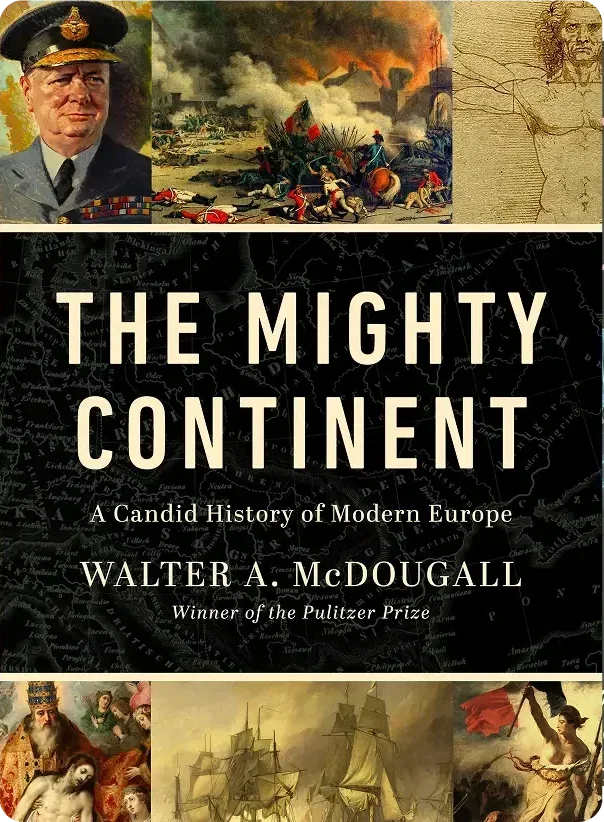
A review of The Mighty Continent in Law and Liberty by Theodore Dalrymple
A question naturally arises when reviewing a conspectus of European history, such as Walter A. McDougall’s The Mighty Continent: A Candid History of Modern Europe. At whom is it aimed? Clearly, one does not criticise a children’s book as if it were a hymnal, or vice versa. What, then, is the function or purpose of a candid history of Europe? (I presume by candid the author means what Oliver Cromwell meant when he asked the portraitist to paint him warts and all. There is to be no attempt to hide the blemishes—and worse—that accompany the glories of that history.)
I imagine two types of reader of a book like this: the first intelligent young people who have somehow missed out on European history and want to fill a lacuna, and the second those who seek a pattern or meaning in its variegated tumults and triumphs. The first will end it much better informed, and the second considerably the wiser.
Naturally, the author of any book that covers so vast a field in so few pages (one page per six years or so) is a hostage not so much to fortune as to nit-pickers, especially nit-pickers, if, for once, I may be allowed a mixed metaphor, with an axe to grind. Why is this included and that left out? Why is this emphasised and that skated over? But a historian who writes an overview of a subject to which hundreds of thousands, possibly millions, of books are relevant is in the same position as an elected politician who cannot please all of the people all of the time.
The author has, mercifully, no axe to grind, no procrustean theory into which facts must fit, and is very fair minded. He begins with an evident truth which nevertheless will raise the hackles of many young people raised by their education to deny evident truths, denial of evident truths now being indispensable evidence of an enquiring mind: namely, that the modern world has been shaped and influenced, both for good and ill, by the European continent as by no other. Maybe the Chinese could have sailed round the globe, seeking new worlds to conquer, but it was the Europeans who did so. It was the Europeans who first formalised a way of interrogating, and then of utilising or subduing, nature. It was Europeans who expressed the most curiosity about other cultures, a curiosity that, pace Edward Said, preceded the age of imperialism. It was they, also, who became extremely self-doubting, so self-doubting, in fact, that they now risk their own cultural and even biological annihilation. Cultural relativism is all very well in a world of cultural relativists: but unless it is reciprocated, it is a recipe for suicide. This is rather akin to the problem of how far a tolerant society should tolerate the intolerant, especially if they are dead set on imposing their ideas on everyone else.
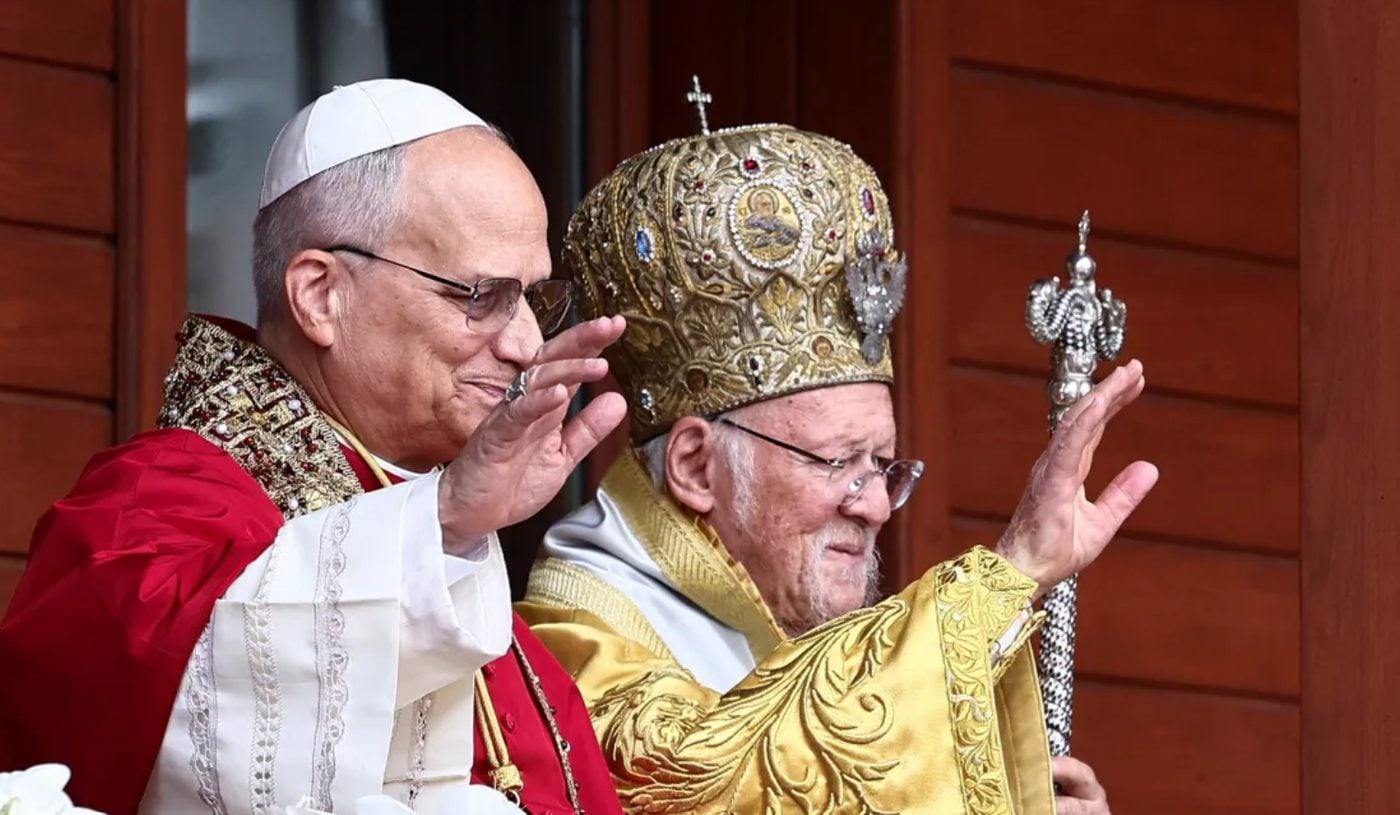
What accounted for the remarkable, outward-looking vigour of Europe, at least in the second half of the second millennium? (This is not to say there was no vigour before.) It was a combination of factors, one of the main ones being the idea that there was a difference between the realm of God and that of Caesar. There was also the unifying factor of the Catholic church, a unifying factor which promoted a unity in diversity, a unity that survived the Reformation. In the eighteenth century, for example, the enemy countries of Britain and France read each other’s books and were influenced by each other’s philosophy. Even at the height of wars, there were Francophiles in Britain and Anglophiles in France. This gave rise to a fruitful if bloody rivalry and spurred both countries to things that they might not have achieved if no such rivalry had existed. And of course, the Anglo-French rivalry was only one of the rivalries of Europe.